Richard Mravik’s Legacy Wildlife Years: The Quiet Formation of a Realist Vision
Richard Mravik’s wildlife paintings occupy a rare and unusual place within contemporary realism: widely collected, quietly dispersed, and only recently beginning to emerge as a unified and deeply significant body of work.
Painted between 1994 and 2009, the Legacy Wildlife Years trace the evolution of a Hungarian-Canadian realist painter whose command of atmosphere, habitat immersion, and luminous natural detail developed largely outside the machinery of institutional promotion. Over the course of sixteen years, Mravik produced an extensive wildlife oeuvre that entered private collections internationally through galleries and collectors active during the height of the North American wildlife art market. Yet because the paintings disappeared gradually into private hands rather than remaining together as a publicly examined body, the full scope of the work — and the level at which it was operating — remained largely obscured.
What emerges today, as these paintings are viewed collectively, is not simply a succession of wildlife images, but the disciplined formation of an extraordinary realist vision.
Long before Richard Mravik became known for his luminous landscapes, the essential intelligence of that later work was already present within the wildlife paintings: reflective water carrying cold blue light through shadow, animals psychologically embedded within atmosphere rather than isolated as subjects, and a remarkable ability to organize dense ecological complexity into visual stillness. Forest floor, marsh reeds, tropical understory, winter silence, stone, bark, feather, mist, fur — all are rendered with the same patient observational sensitivity and tonal restraint.
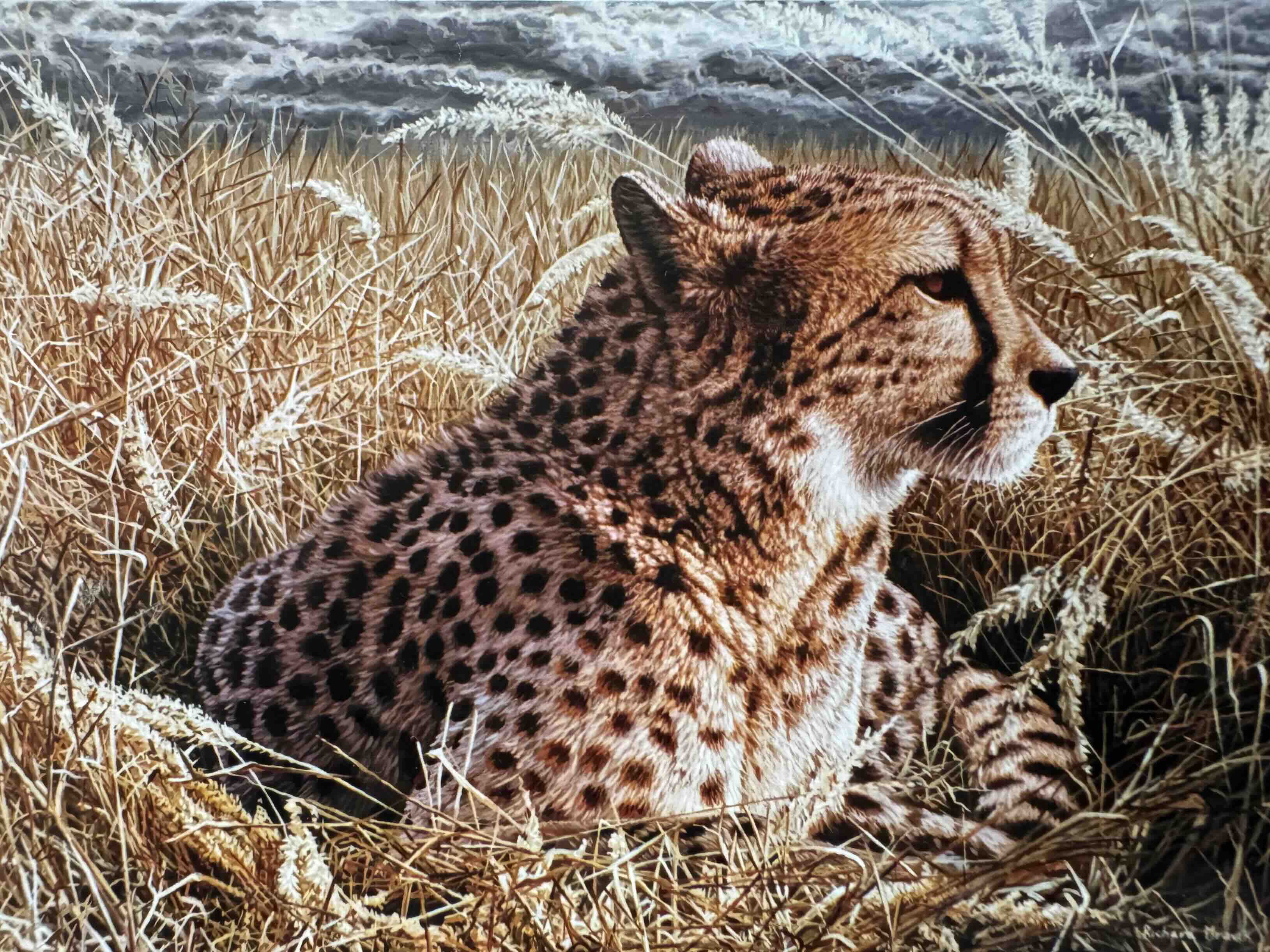
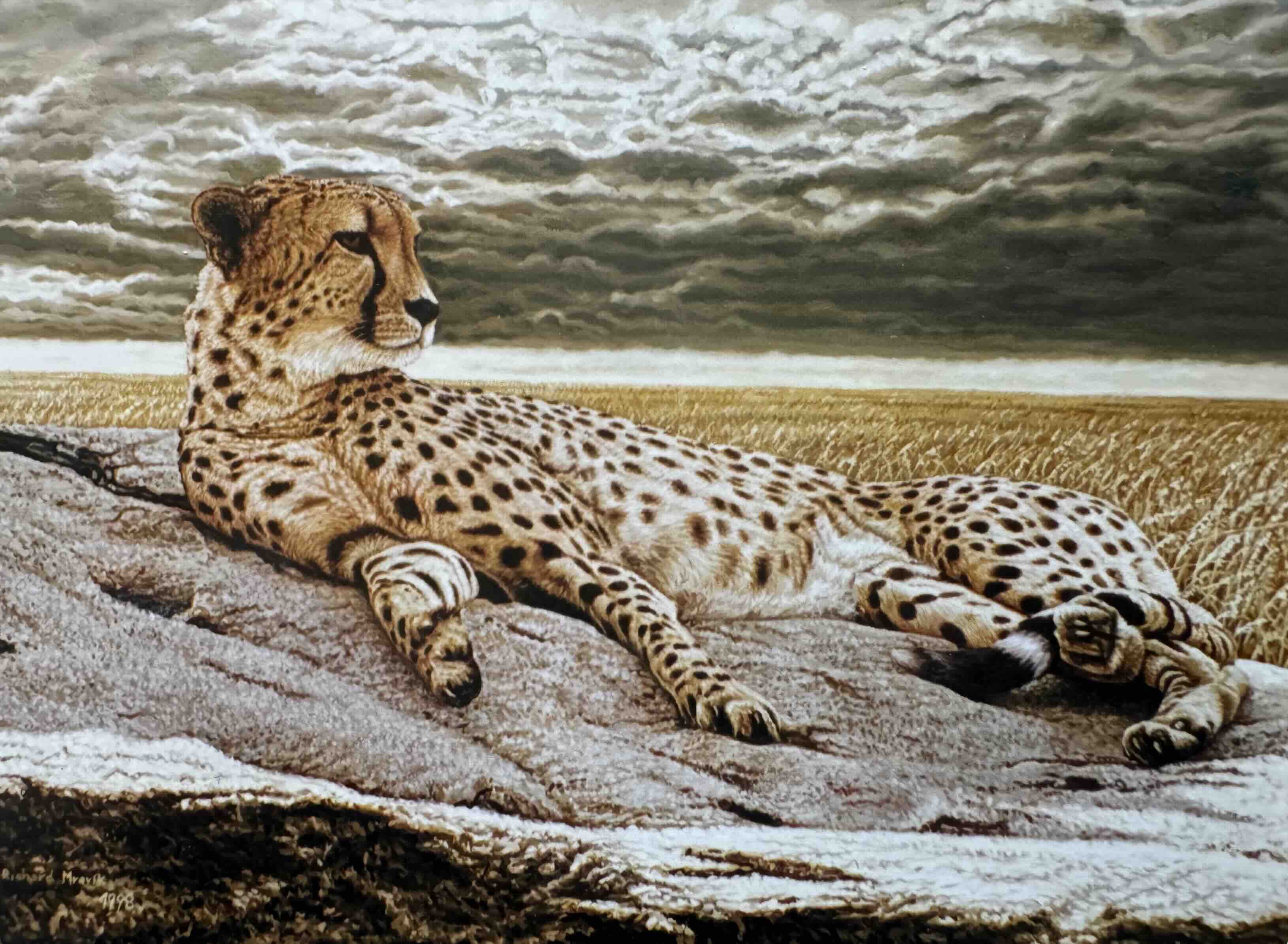
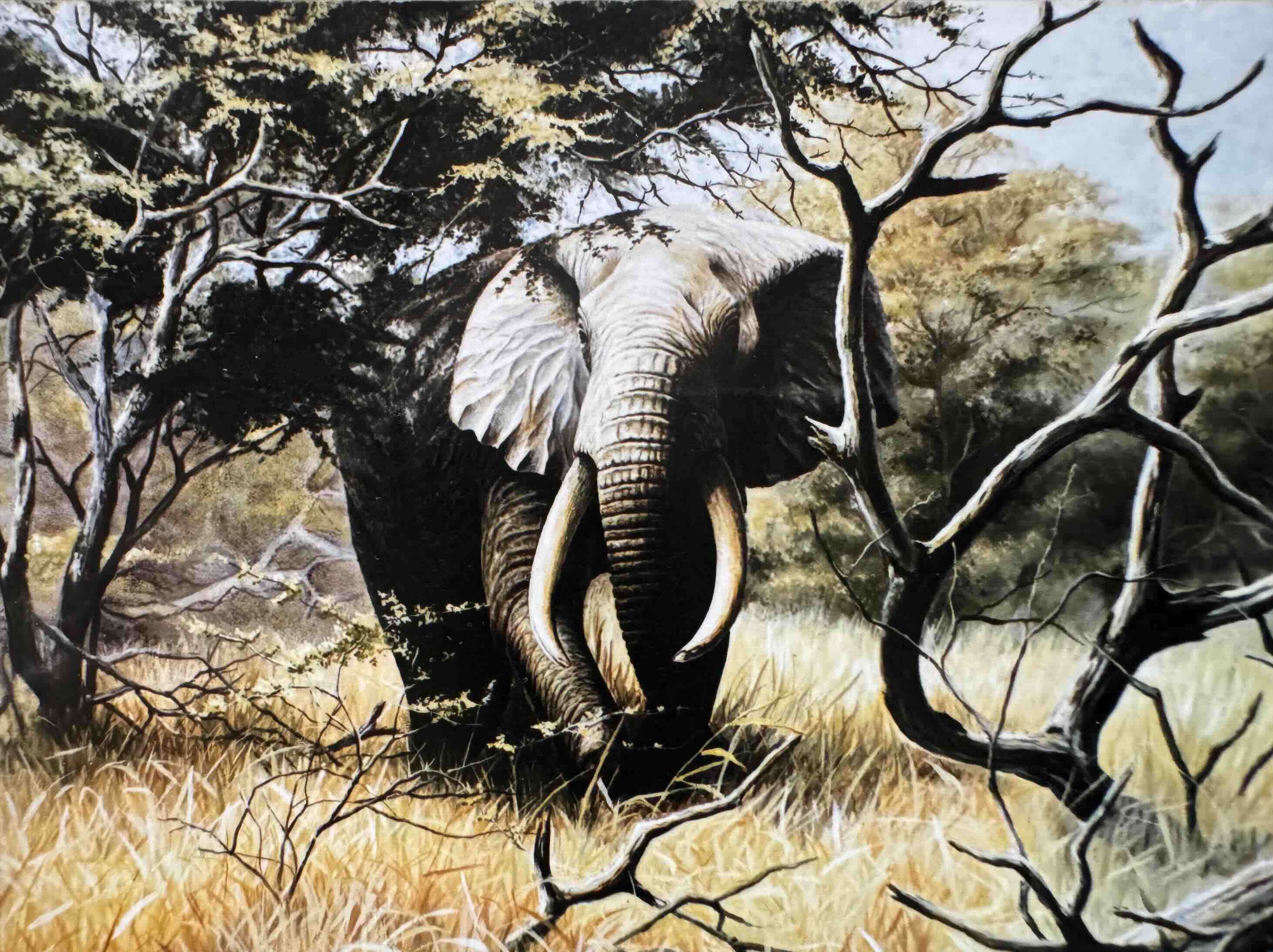
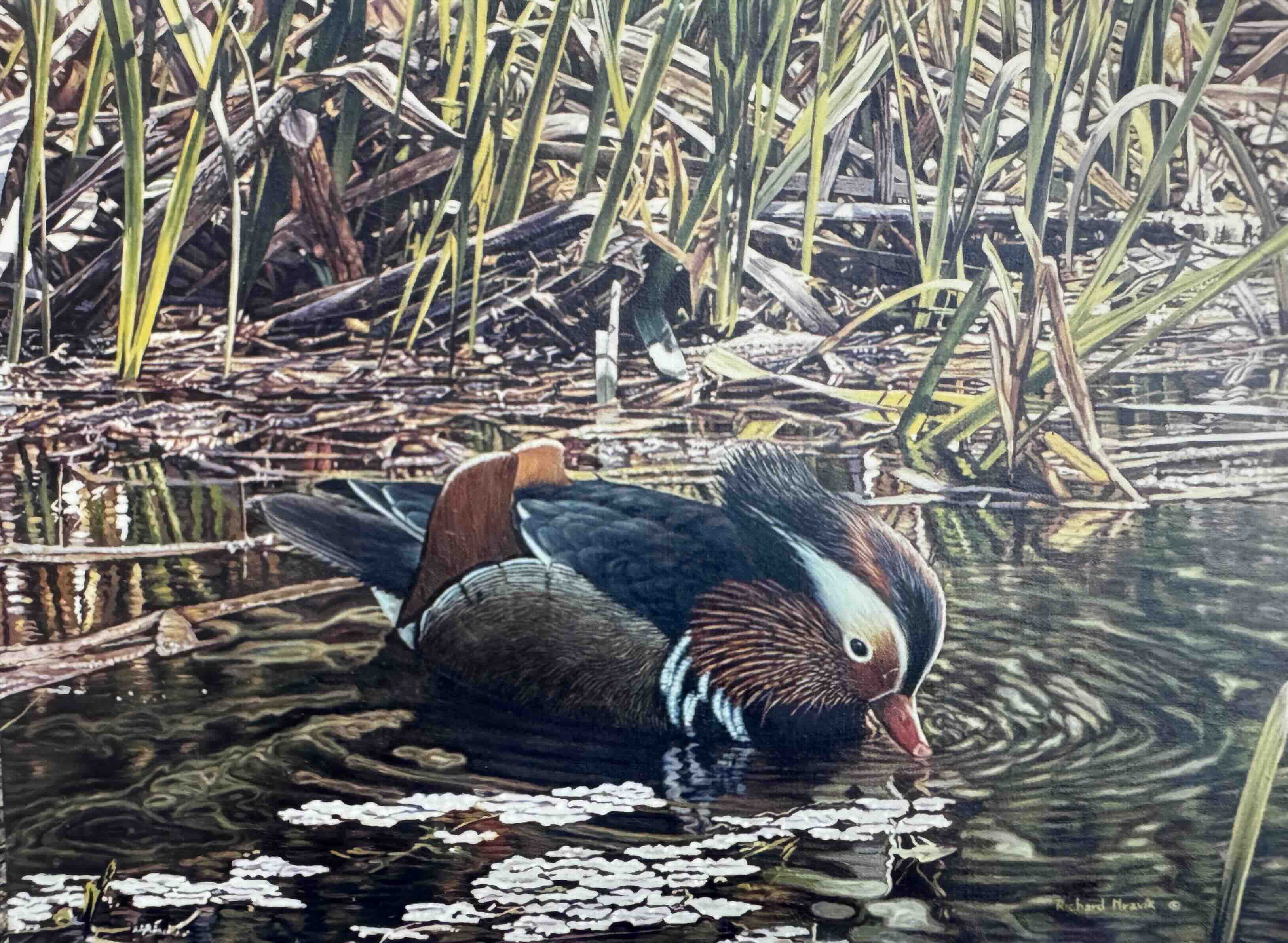
The paintings do not feel manufactured from formula. They feel discovered.
This distinction is central to understanding the Legacy Wildlife Years.
Many wildlife painters learn to depict animals convincingly. Far fewer create the sensation that the viewer has entered a living environment already in progress — a world continuing beyond the frame. In Mravik’s strongest works, habitat is never passive background decoration. It becomes atmosphere, structure, psychology, and stage. The animal emerges from within its environment rather than being placed upon it.
That sensitivity did not go unnoticed within the professional wildlife art community of the late twentieth century.
“What emerges today, as these paintings are viewed collectively, is not simply a succession of wildlife images, but the disciplined formation of an extraordinary realist vision.”
During his early years in Canada, Mravik worked within the same collector and gallery ecosystem that elevated many of the era’s most respected wildlife realists. His paintings were internationally placed beginning in the late 1990s through galleries such as the Paul Burdette Gallery, whose collectors included both Robert Bateman and Richard Mravik. After viewing one of Richard’s paintings, Bateman approved his hiring through Nature’s Scene, an affiliate of Mill Pond Press, later encouraging the young painter and remarking upon the exceptional pace of his artistic refinement and development.
Importantly, these moments occurred quietly — not through manufactured publicity, but within professional circles already capable of recognizing advanced realist discipline when they encountered it. The Legacy Wildlife Years themselves unfold through three distinct chapters.
The earliest formative works, painted during Mravik’s first years in Canada, reveal a painter in rapid acceleration. Even here, one sees the foundations of the mature language beginning to emerge: disciplined tonal orchestration, close zoological observation, immersive habitat construction, and an instinctive understanding of atmospheric depth and natural rhythm.
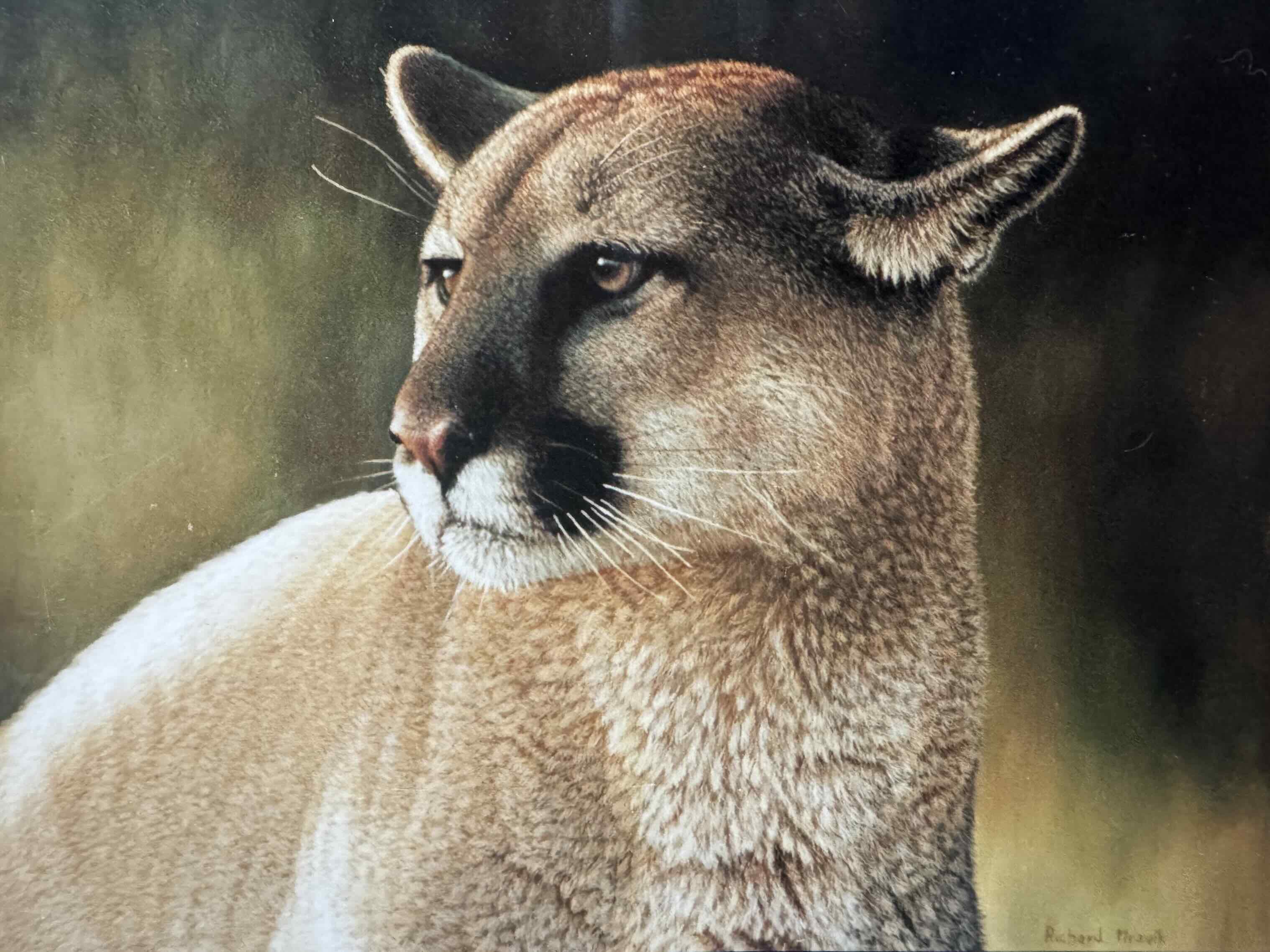
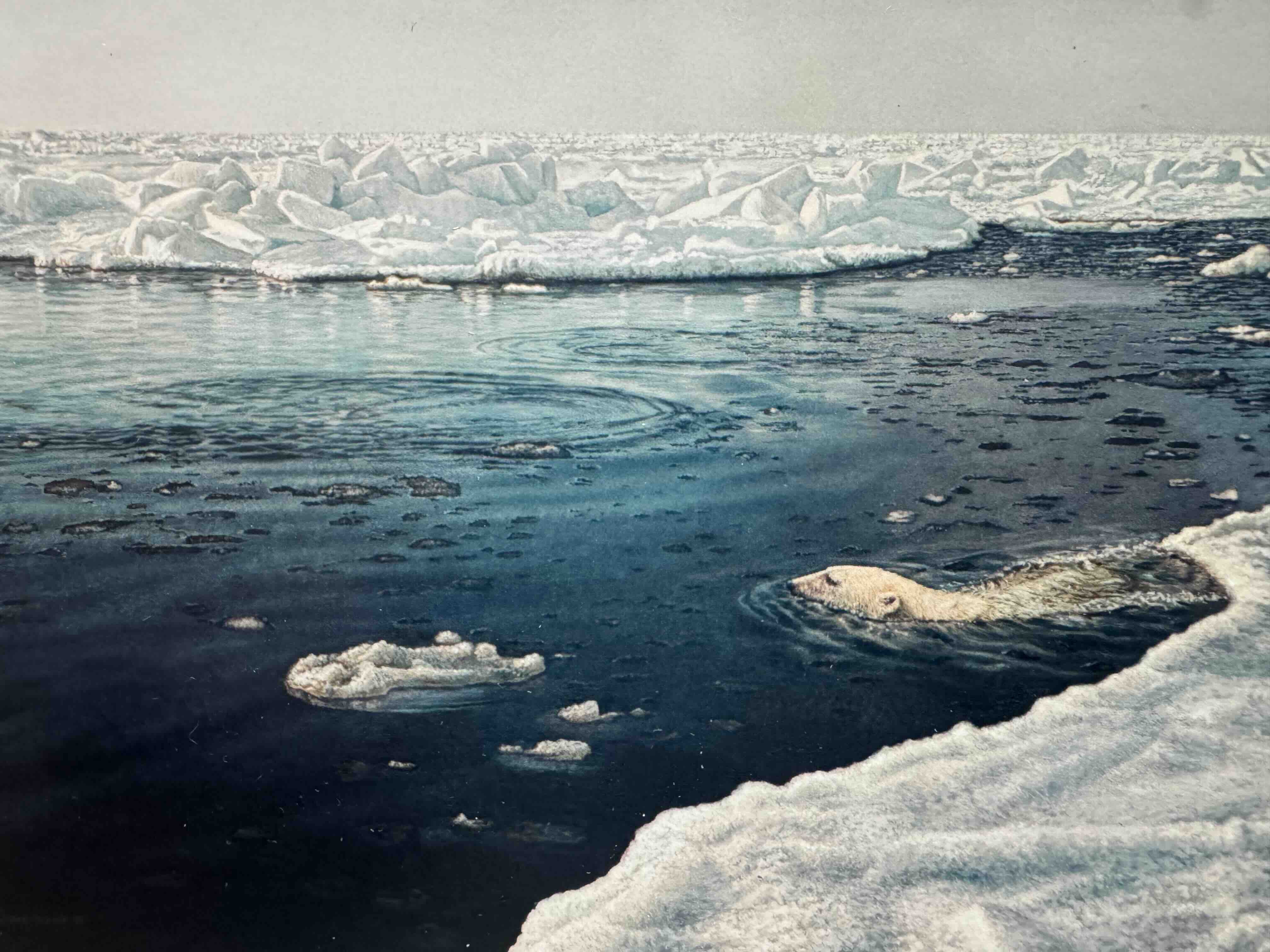
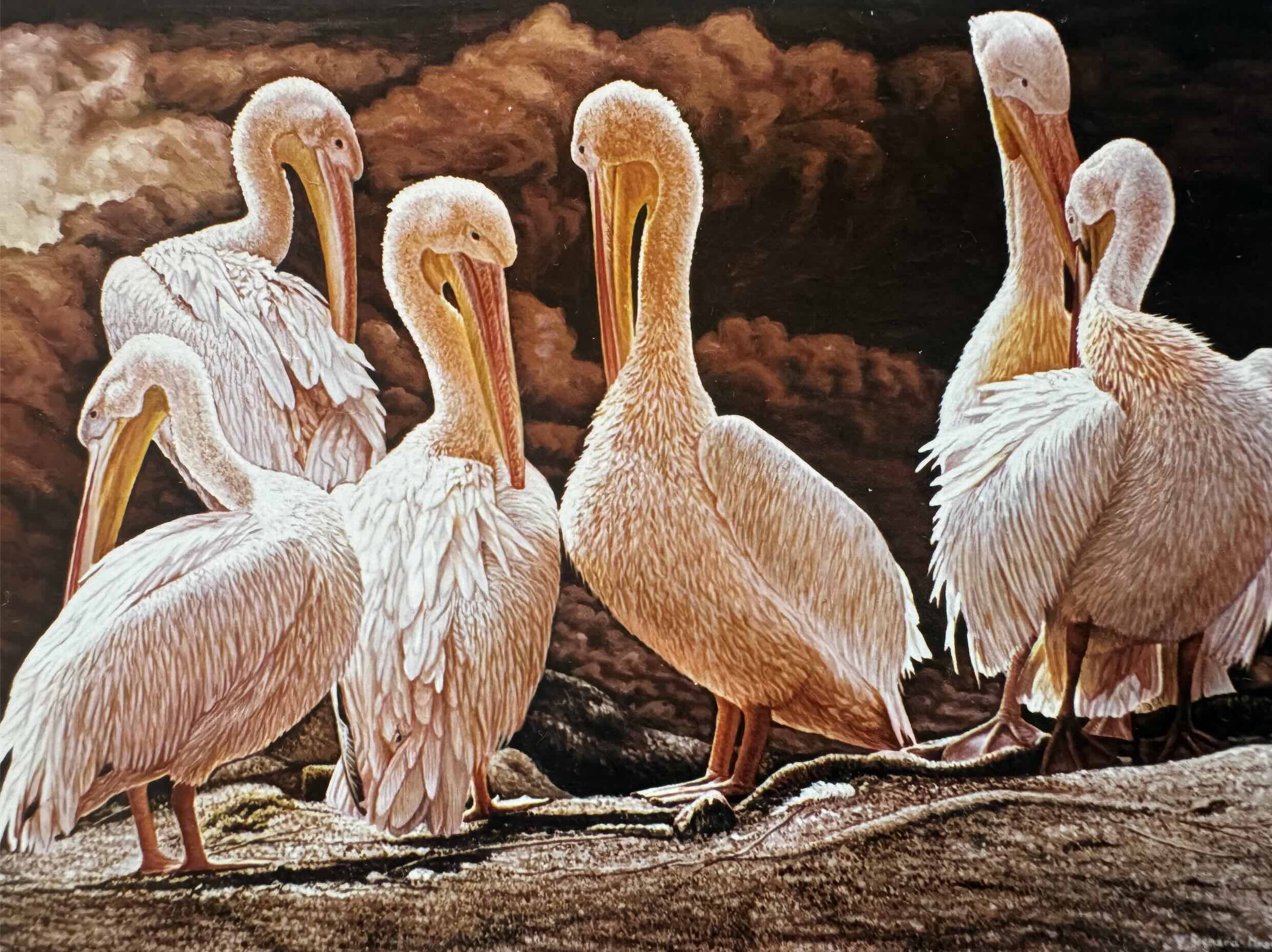
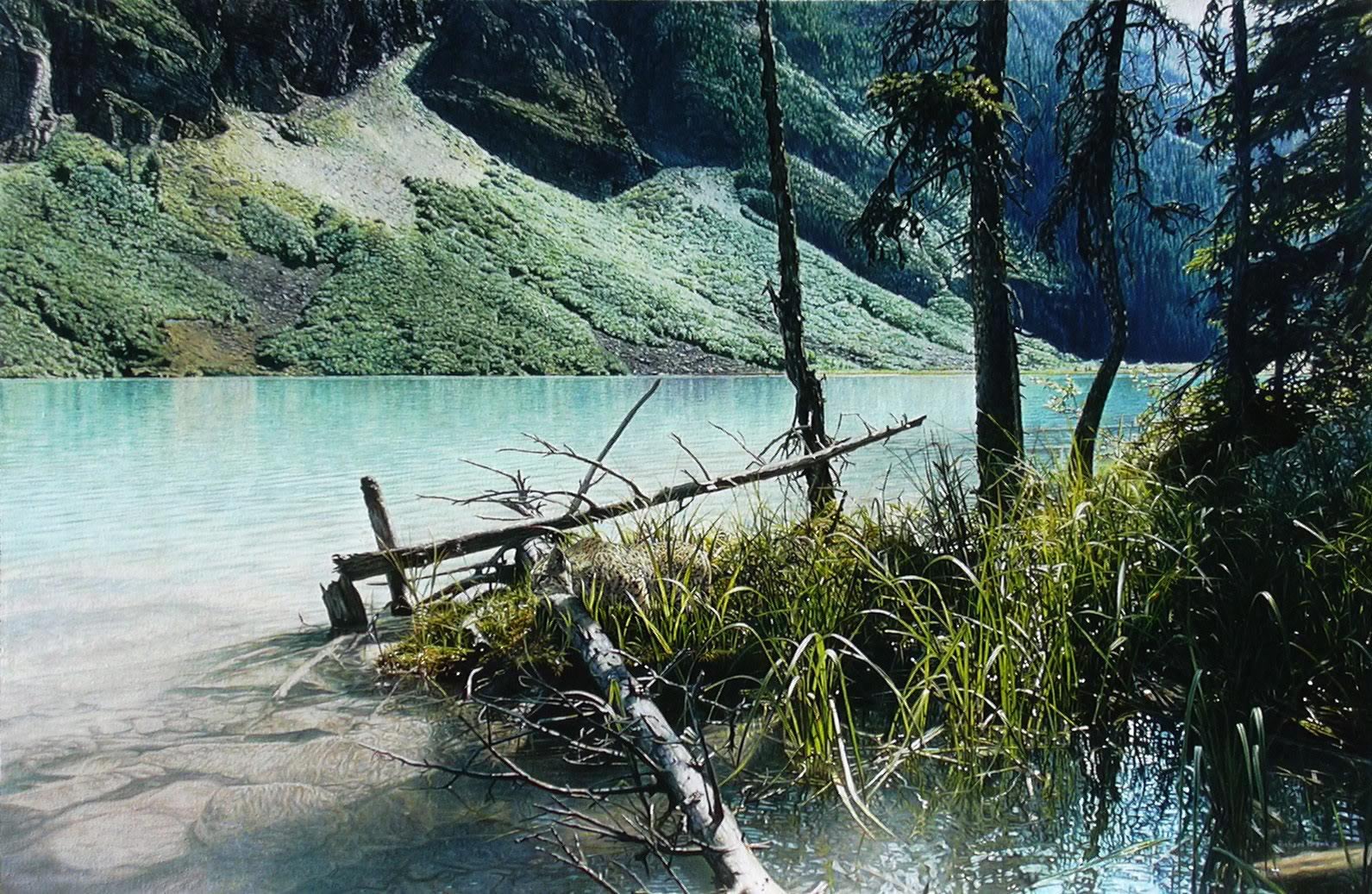
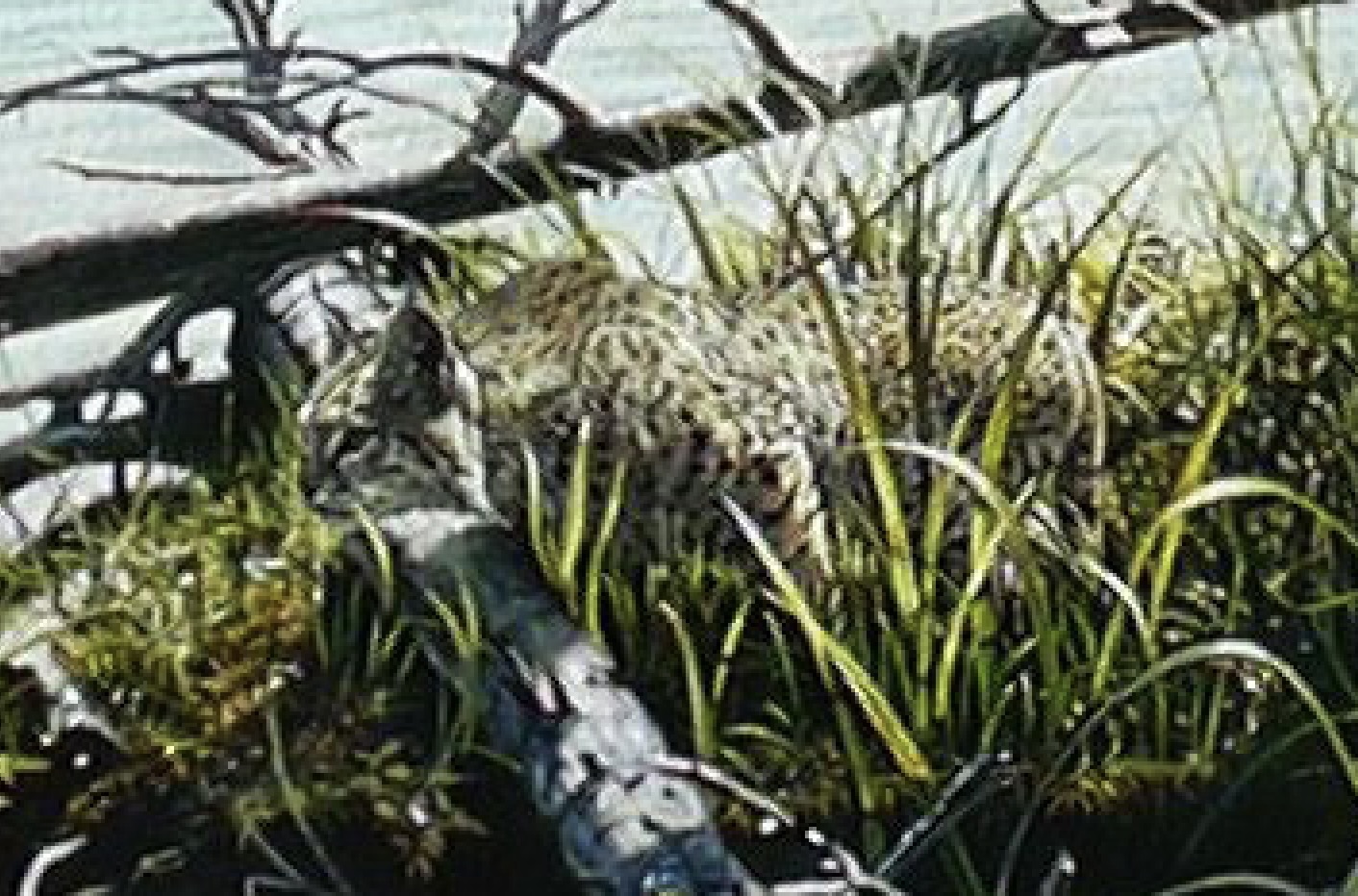
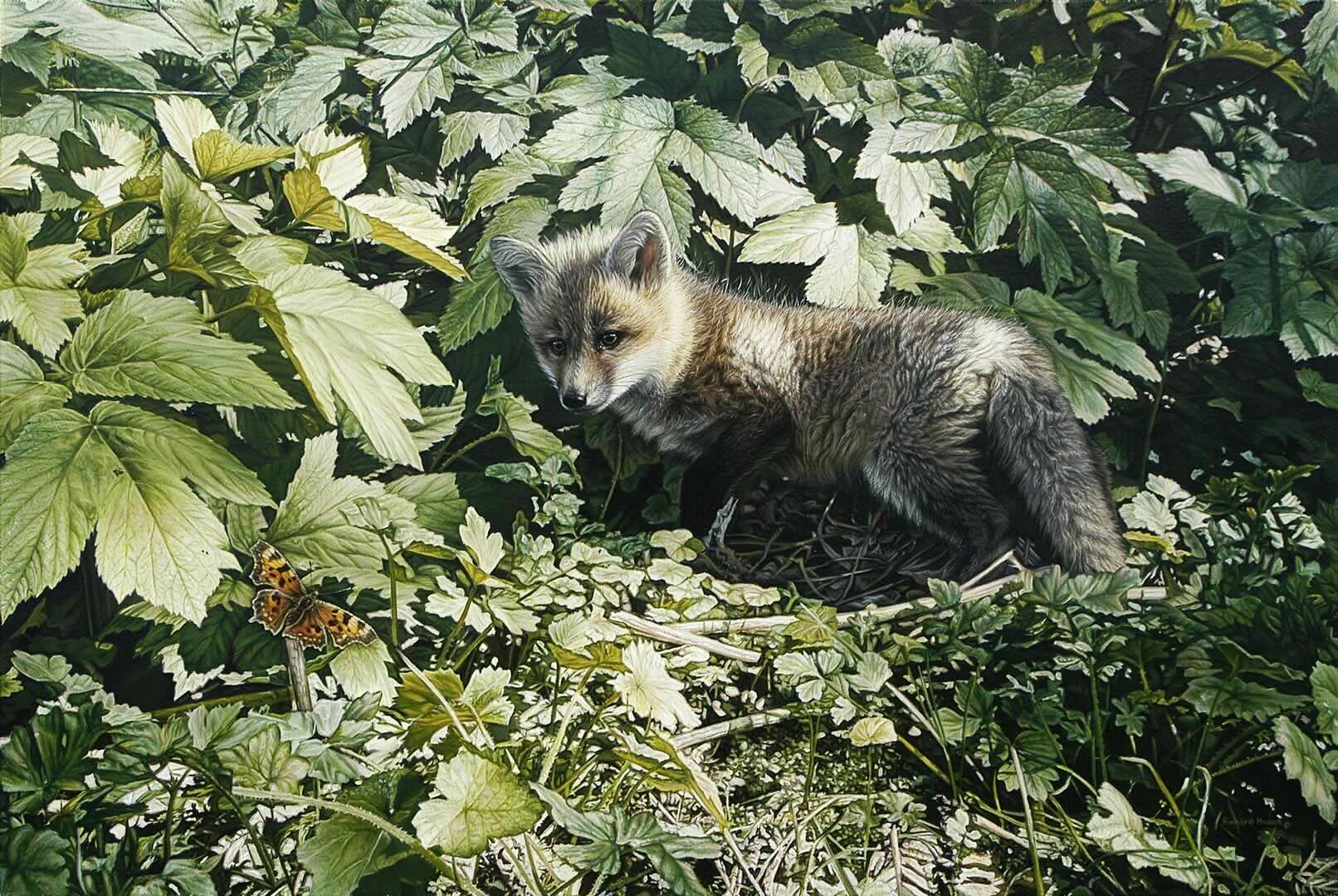
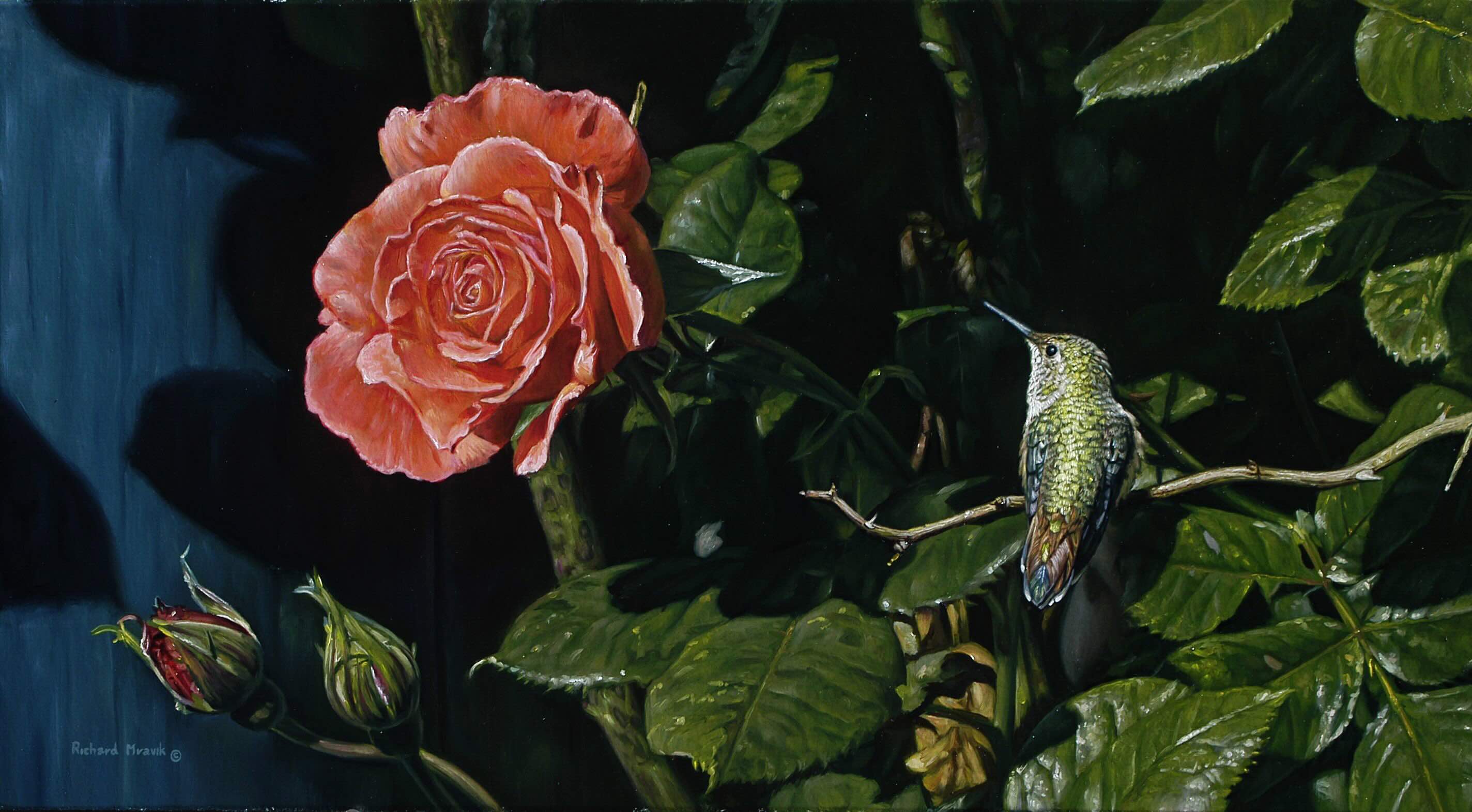
By the late 1990s, during what may be considered the Canadian Wildlife Market Years, the paintings achieve a heightened authority and compositional confidence. These works contain many of the benchmark images of the wildlife oeuvre — juvenile owls concealed within spring undergrowth, predators dissolving into cathedral-like tropical shadow, wolves and waterfowl suspended within immersive environmental stillness. It is during this period that Mravik’s realism becomes less descriptive and increasingly experiential. The paintings begin to carry emotional weather.
Following his gradual withdrawal from the formal wildlife art market in the early 2000s, the final wildlife years become quieter, more atmospheric, and increasingly inward in tone. Wildlife remains present, but landscape begins to expand around it. Light lingers longer. Space deepens. Silence becomes central. Seen now, these late works feel less like a conclusion than a transition — the bridge between Mravik’s wildlife realism and the luminous landscape practice that would later define his mature career.
Richard Mravik no longer paints wildlife.
For that reason, the Legacy Wildlife Years form a permanently closed chapter within the artist’s oeuvre: a finite body of realist paintings rooted in prolonged observation, technical restraint, and a profound sensitivity to the emotional intelligence of nature.
Today, as collectors and specialists increasingly return to works that bear unmistakable evidence of human discipline, patience, and hand-built vision, these paintings invite renewed attention. Not simply as examples of wildlife art, but as the foundational achievements of a painter whose full significance remained, for many years, quietly hidden in plain sight.
There is a particular fascination in bodies of work that arrive late to their own recognition.
The Legacy Wildlife Years carry precisely that feeling.